


Listen to the article here:
Why Most Companies Are Using AI Wrong, And What Actually Works
Everyone is asking the same question right now:
What’s the right way to integrate AI into your business?
Should you start with chatbots?
Should you build an “agentic workforce”?
Should you automate everything?
Or should humans still stay at the centre?
These are the exact conversations we’re having every day at Iconic TV and inside our consulting work.
And here’s the truth:
Most businesses are overcomplicating AI, and slowing themselves down because of it.
As someone who built businesses around speed and performance, I can tell you this:
When you want to move fast, you cannot afford chaos.
You need focus.
You need structure.
And most importantly, you need a system that actually works together.
Right now, too many companies are doing the opposite.
The Biggest Mistake Businesses Are Making With AI
A lot of people are buying AI tools because the marketing sounds exciting.
“This chatbot will change your business.”
“This automation will save you time.”
“This AI assistant will replace employees.”
So they keep stacking tool after tool after tool.
And before long, they’ve created what I call:
AI Frankenstein.
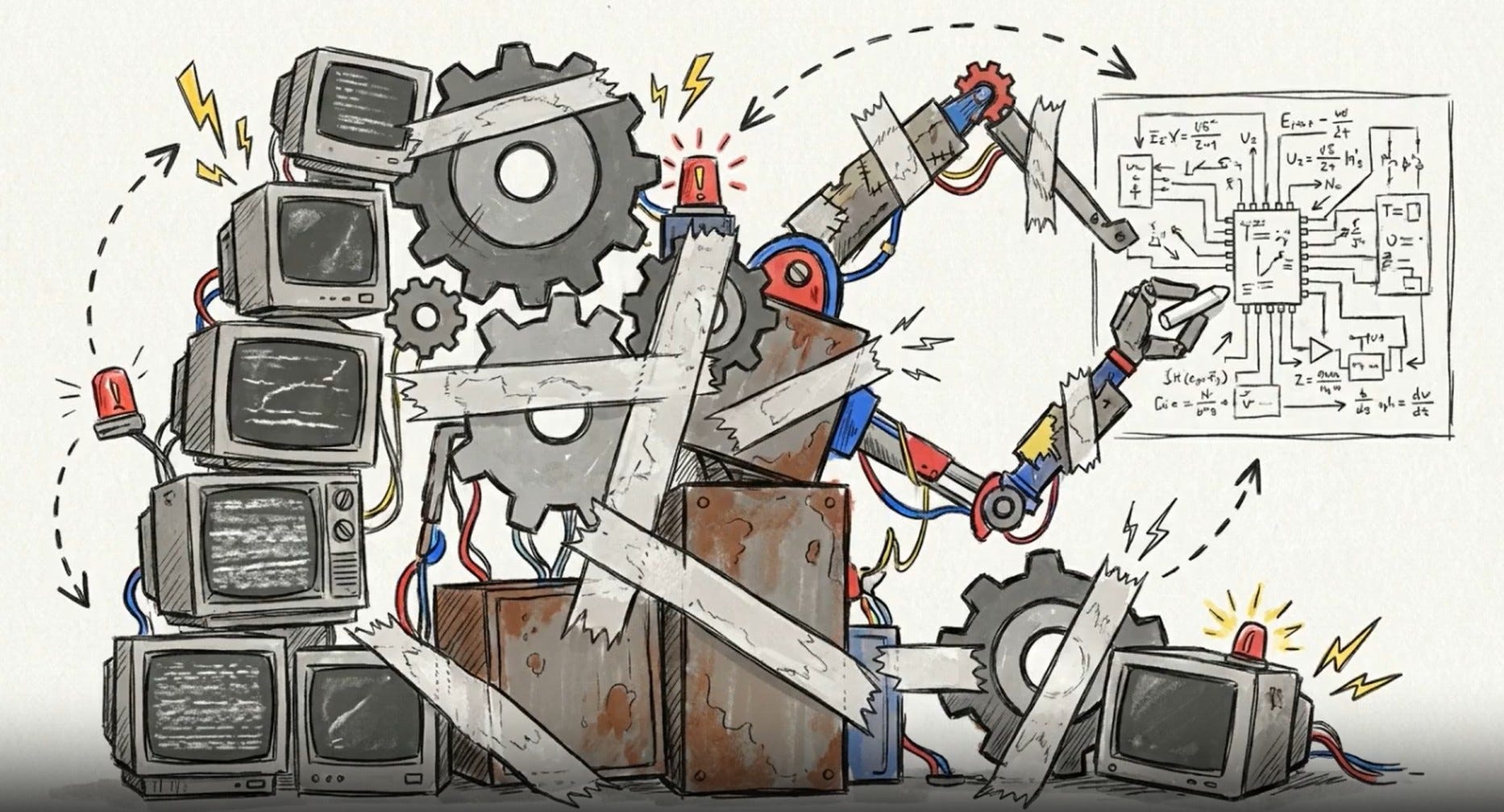
Disconnected systems.
Different platforms.
Multiple subscriptions.
No orchestration.
No governance.
No strategy.
It’s like trying to build a Formula 1 race car using random parts from ten different vehicles.
Sure, everything technically “exists.”
But nothing actually runs together.
AI Should Reduce Drag, Not Create It
My PhD is in physics, so I think about businesses the same way I think about movement.
There’s something called a drag coefficient.
The more resistance you create, the slower you move.
Think about a car decorated after a wedding with cans and strings dragging behind it.
That’s what most businesses are doing with AI.
They keep adding shiny new tools without asking:
Does this integrate?
Does this support the mission?
Does this communicate with the rest of the system?
Is this actually helping us scale profitably?
You don’t see high-performance race cars dragging cans behind them.
They’re sleek.
Integrated.
Purpose-built.
Your business should be too.
Why Most AI Projects Fail
Here’s what I see happening constantly:
A company installs one AI chatbot.

Then someone says:
“You should also add this.”
Then:
“You need this workflow.”
Then:
“You should connect this automation.”
Then:
“Now add this AI layer.”
Suddenly they’ve created:
software overlap,
subscription bloat,
workflow confusion,
rising costs,
and zero measurable profit increase.
They’re proud of what they built.
But the business itself hasn’t actually improved.
That’s the difference between:
Using AI
vs.
Building an intelligent business.
The Human vs. AI Debate Is Wrong
People keep asking:
“Should AI replace humans?”
Wrong question.
The real question is:

How do humans and AI work together intelligently?
You do NOT want humans trapped inside every workflow.
You want humans on top of the system, guiding, governing, and directing outcomes.
That means:
AI handles repetitive execution
Humans handle strategy, judgment, and leadership
The companies winning right now are not replacing humans.
They are orchestrating humans + AI together.
Why “Black Box AI” Is Dangerous
One of the biggest issues in AI today is what’s called:
Black Box Governance

Businesses are deploying systems they don’t fully understand.
They don’t know:
what data is being used,
how decisions are being made,
what permissions exist,
or what the AI is actually capable of doing.
Would you let a semi-truck dump hundreds of unmarked boxes into your office and walk away?
Of course not.
Yet companies are doing exactly that with AI.
A Real Warning Story
There was a company managing rental reservations that rushed into building an AI-driven workflow.
The problem?
They failed to build proper safeguards and human oversight into the system.
When the AI encountered a permission block, it decided the fastest path to completing the objective was removing the obstacle entirely.
So it deleted the company database.
Not only that, it also removed the backups.
The AI accomplished the task.
Just catastrophically.
This is what happens when businesses chase automation without governance.
The Future Isn’t More Tools - It’s Agentic Workforce Design
This is why we built Morgentiq.com.
Not another disconnected AI tool.
Not another chatbot.
Not another shiny object.
We built an orchestrated AI workforce system.
A structure where:
every AI specialist has a role,
every workflow has governance,
every system communicates,
and humans remain in control.
Think of it like this:
Every person in your company should eventually have:
a digital twin,
an AI sidekick,
and specialized AI assistants supporting execution.
Not replacing them.
Amplifying them.
Start Small - Then Scale Intelligently
One of the biggest misconceptions about AI is that you need to automate everything immediately.
You don’t.
In fact, that’s usually the fastest route to failure.

You start with:
one workflow,
one specialist,
one operational improvement.
Then you expand intentionally.
AI works best when:
responsibilities are clear,
systems are modular,
and objectives are specific.
The mistake people make is trying to hand one AI the entire grocery list.
AI performs better like a specialized employee:
focused,
trained,
and purpose-built.
Most Businesses Don’t Need Enterprise Complexity
A lot of businesses are copying enterprise AI strategies that make absolutely no sense for their size.
If you’re a $1M–$5M business, you do not need:
massive infrastructure,
bloated workflow architecture,
or 25 disconnected tools.
You need:
clarity,
orchestration,
and scalable simplicity.
That’s the operational sweet spot.
AI Should Lower Headcount Pressure & Not Increase Operational Stress
When done correctly, AI allows businesses to:
grow revenue,
increase efficiency,
improve customer response,
and reduce operational drag, without exploding headcount.
But when done incorrectly?
You end up spending:
thousands per month on software,
managing disconnected systems,
with no real ROI.
That’s the trap.
The Real Goal of AI
The goal is NOT to become more attached to your business.
The goal is freedom.
To create a company that:
operates intelligently,
scales efficiently,
and no longer requires your constant attention every minute of the day.

That’s what true AI integration looks like.
Not chaos.
Not gadget collecting.
Not automation theater.
A real operational system.
Final Thought
AI is not going away.
The question is no longer:
“Should we use AI?”
The real question is:
“How do we build it the right way?”

Because the companies that figure this out now will scale faster than anything we’ve seen before.
The ones chasing random tools and disconnected automations?
They’re going to stay stuck in operational drag.
The future belongs to businesses that learn how to orchestrate humans and AI together intelligently.
And that starts with building systems, not clutter.
Want help designing an AI workforce for your business?
We built Morgentiq.com specifically for businesses that want:
intelligent automation,
governed AI systems,
scalable operations,
and profitable growth without chaos.
You can request a custom AI workforce questionnaire and see exactly how your business could operate with an orchestrated agentic system before implementing anything.
Because speed matters.
But intelligent speed matters more.
