



Listen to the article here:
A deferred decision doesn’t disappear. It compounds against you somewhere else in the business, quietly, until it doesn’t.
Most founders think of caution as a virtue. Wait for more data. Wait for the right moment. Wait until you’re sure. Sometimes that’s wisdom. Most of the time, it’s decision debt accruing interest while you wait.
Two Companies Proved This Two Different Ways
Kodak’s engineer Steve Sasson built the first digital camera in 1975. Executives told him to keep it quiet, not because they didn’t see digital coming (their own research predicted it would replace film within 20 years), but because their film business was too profitable to risk.

That’s fear-driven decision debt: seeing the fork clearly and refusing to take it.
Blockbuster’s version was blindness, not fear. In 2000, Netflix’s founders offered to sell their struggling company to Blockbuster for $50 million.
Blockbuster’s executives laughed them out of the room, not out of caution, but because they didn’t register a decision was even on the table.
A public company evaluating everything on a 90-day earnings window doesn’t have room for a five-year bet, even a cheap one.
The Harder Failure Mode: Deciding Twice
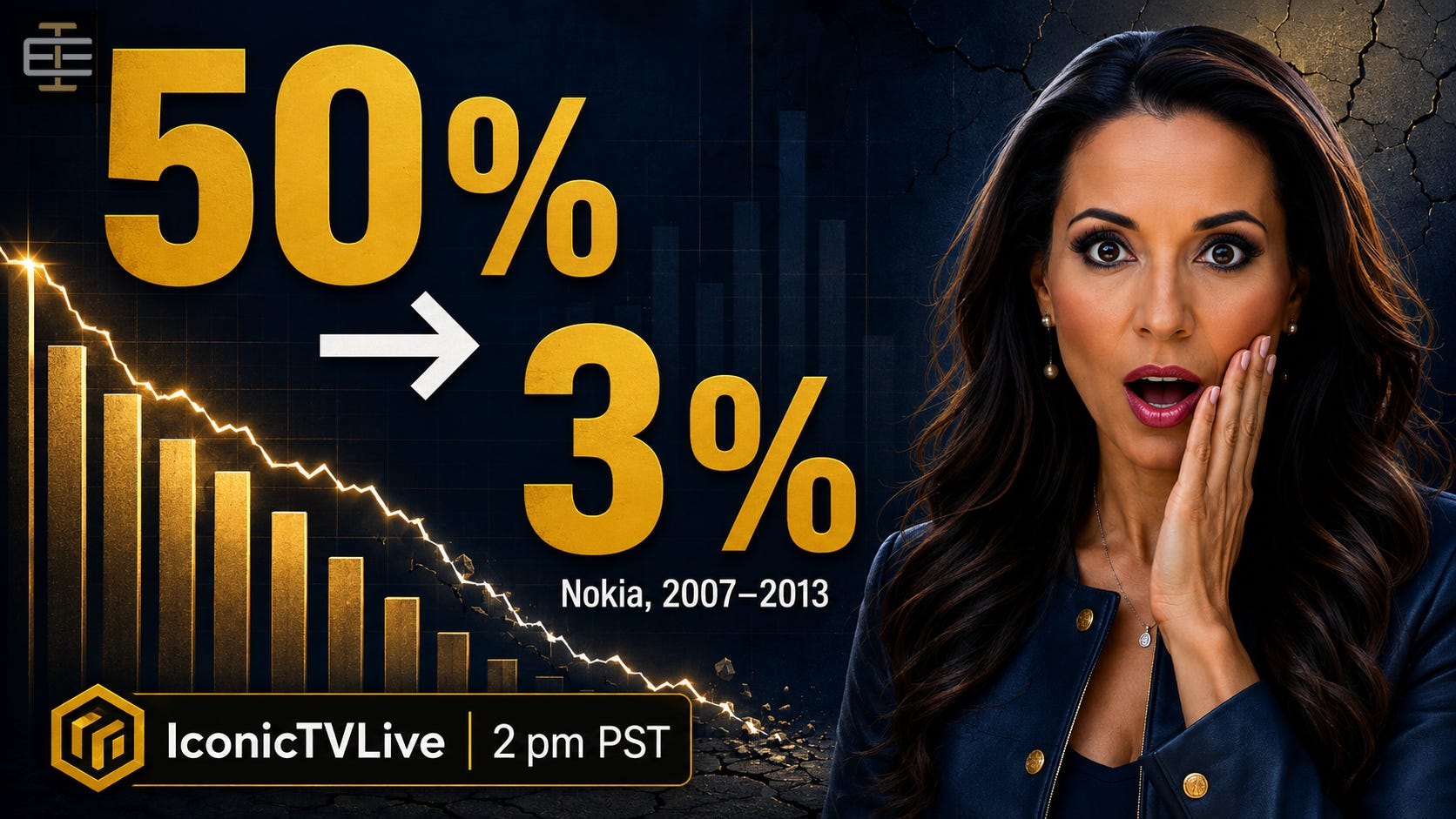
Nokia’s collapse is the one that should worry you most, because it doesn’t look like either of the above. In 2007, Nokia held roughly half the global smartphone market.
In February 2011, they announced a move to Microsoft’s Windows Phone platform, while continuing to ship phones on their own competing Symbian system. Two operating systems, one company, full commitment to neither.

By 2012, Nokia posted its first annual loss since entering the mobile phone business in 1992. By 2013, their smartphone market share had fallen to 3%, shipments had dropped from 463 million phones to 4.4 million, and the company had lost 90% of its market value, all in six years.
Nokia didn’t fail to decide. They decided twice, in two directions, at once. That costs exactly what indecision costs.
It just takes longer, and it comes with better slide decks along the way.
What Decision Debt Looks Like At $1M–$10M
I watched this exact pattern play out with a health and wellness founder I worked with. She’d built her company to $500,000 a month, fast, real growth. But delivery was inconsistent, cancellations were climbing, and the service quality ran entirely through her.
The decision in front of her was simple to name and hard to make: fix the delivery system, or keep feeding the front end with more sales reps. She chose to keep feeding it. Costs rose. Profit fell. Revenue, the number that felt good to look at —stayed high enough to mask what was actually happening underneath it.
She knew the fix. Hire a sales manager, build a real delivery team, get herself out of the one seat the business was straining through. She stalled on it for seven months. Then she closed the company.
It was her fourth company to end that way.
The Physics Of It
Metal rarely fails from one overload. It fails from fatigue, repeated stress cycles, each one below the threshold that would break it alone, each one leaving a crack a little longer than the last.
Nothing looks wrong from the outside, until a stress cycle no different from the last ten thousand finally propagates the crack all the way through.
Every deferred decision is a cycle like that. None of them break the business on their own.
That’s exactly what makes them dangerous.
If you’re seeing those cracks in your business, or wondering what’s quietly creating them, it’s time to stop guessing.
Book an AI Workforce Design Intensive workshop with me and we’ll identify where AI can eliminate bottlenecks, reduce operational drag, and turn deferred decisions into measurable action.
Don’t wait for the crack to become a break.

Pivot or Polish: The Question Underneath All of It
The real question was never “should I be more decisive.” It’s whether you actually know if this is a pivot decision or a polish decision, or whether you’re guessing, and calling the guess a decision.
That’s the entire function of a real diagnostic: not a strategic plan built on assumptions, but a forensic read on what’s actually true in your numbers right now.
If you want that read, that’s what a TIPS Assessment is built to give you. One session, real numbers, a clear answer on where the debt actually sits.
The debt doesn’t go away because you stopped looking at it.
It only goes away when you SERVICE it.
Want to have an Iconic AI Workforce Design demo for your business?
